
Remember the days of Skype before smartphones took over? It was all about those late-night calls on your computer, hoping your connection didn’t drop mid-conversation. We’d gather round the screen, sharing laughs and stories with friends from miles away. It was a simpler time, but oh, how it brought us together! We’ve come a long way from the days of tangled phone cords and expensive long-distance bills. Today, most of us use VoIP (Voice over Internet Protocol) without even thinking about it. Whether you’re jumping on a quick Skype call, sending a voice note on WhatsApp, or attending a global Zoom meeting, you are using the power of the internet to carry your voice.
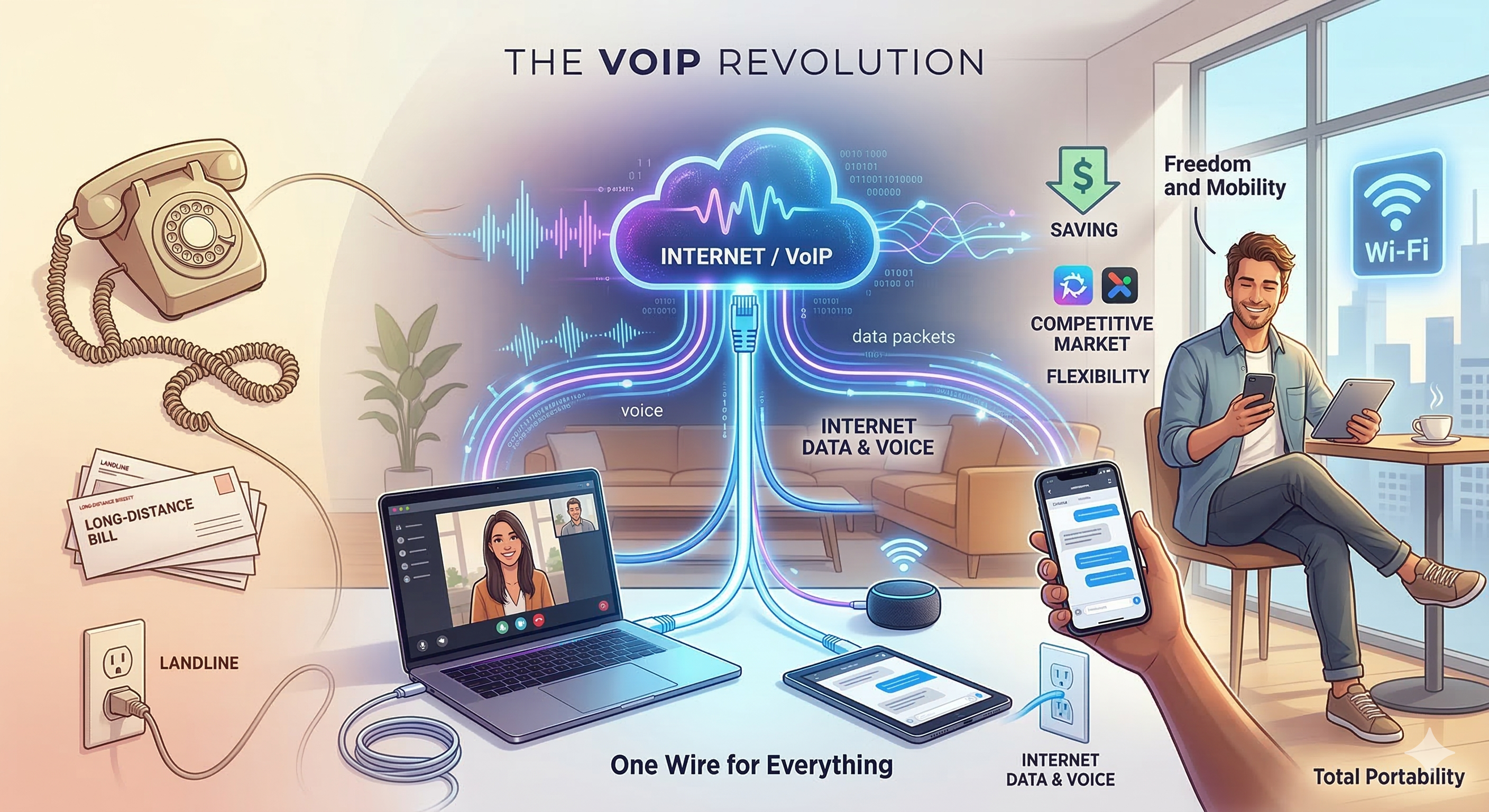
At its heart, VoIP is beautifully simple: it takes the sound of your voice, turns it into digital “packets,” and zips them across the web to your listener’s speakers. It’s an invisible relay race that happens in milliseconds, allowing us to stay connected across continents for a fraction of what a traditional phone call used to cost.
Why the World Switch
The shift toward internet calling wasn’t just about cool technology; it was about freedom and efficiency. For businesses and home users alike, the benefits were too big to ignore:
Cost Savings: Since the data travels over your existing internet connection, those heavy “per-minute” charges have mostly vanished. One Wire for Everything: You no longer need separate lines for your phone and your computer. One network handles it all. Total Portability: Your “phone number” is no longer tied to a physical plug in the wall. You can take your VoIP identity with you on a laptop, a tablet, or a smartphone, anywhere there’s Wi-Fi. A Competitive Market: With so many providers now available, users have more choices—and better quality—than ever before.
The Language of Digital Calls
In the early days of the internet, VoIP was a bit like the “Wild West.” Different programs couldn’t talk to each other because they all spoke different digital languages. If you were on one service, you couldn’t call a friend on another.
To fix this, the tech world had to agree on “handshake” protocols—the rules that allow different systems to connect. You might see terms like H.323 (an older standard that paved the way) or SIP (Session Initiation Protocol). SIP is the modern heavyweight in this space; it acts like a digital switchboard, managing how calls start, stay connected, and eventually end.
By standardizing these “languages,” the industry ensured that VoIP wasn’t just a niche hobby for techies, but a reliable global standard that has permanently changed how we say “hello.”
Leave a Reply